A place to actually get better
Find teammates who train, not just people to queue with.
PlayPractices pairs you with players at your level for real practice — reviewing rounds, calling strats out loud, and showing up again next week. Twelve games, every platform, one shared goal: getting better on purpose.
 ROTATE B
COMMS CHECK
VOD · 12:04
DAILY RUN
ROTATE B
COMMS CHECK
VOD · 12:04
DAILY RUN
About PlayPractices
We built the practice partner we couldn't find.
Most matchmaking is built to fill a lobby, not to make you better. You get a few minutes of small talk, a match nobody remembers, and a scoreboard that resets the second it ends. PlayPractices is built around a different unit of time: the practice session — a recurring block where a small group works on something specific and checks back in next week to see what stuck.
We're not an esports academy, and we're not a ranked-only clique. Most people here are climbing out of the rank they've been stuck in for months, or picking up a game their friends already play and don't want to learn alone. What we ask for is consistency: show up, communicate, and treat your practice partners like people you're building something with.
Sample practice log
- Tue 8:00 PM — Rotation drill · Valorant
- Thu 7:30 PM — VOD review · Counter-Strike 2
- Sat 3:00 PM — Ranked warm-up · Overwatch 2
How it works
Four steps, then it's just showing up.
Build a player profile
Add your games, rank or skill level, role, timezone, and how you like to communicate. Fifteen minutes, no essay required.
Get matched on more than rank
Matching weighs goals as well as skill — a player grinding utility lineups isn't matched the same way as one drilling ranked comms.
Run your first session
Jump into a scrim, a VOD review, an aim block, or a comms drill. Sessions have a clear focus, so nobody's guessing what tonight is for.
Keep the group going
Good practice partners are worth keeping. Set a recurring time and build a group that remembers last week's mistakes.
Why practice together
Solo queue teaches you to survive it. Practice teaches you to improve.
Repetition beats luck
Random matchmaking gives you a different five strangers every game. Structured practice lets you run the same rotation, the same execute, the same call-out — until it's automatic.
Feedback needs a second opinion
A teammate who watched your last three sessions can tell you what actually changed. A stranger from ranked can't — they were only ever there for the one game.
Comms are a trained skill
Most players get worse at comms in solo queue, not better — nobody's listening long enough for it to matter. Regular sessions build the shorthand real teams rely on.
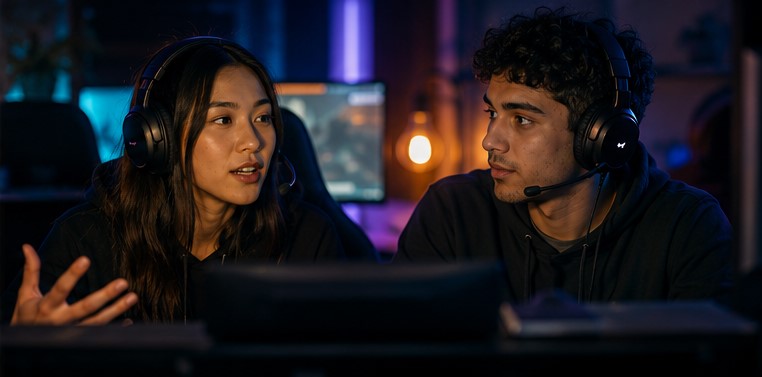
Practice in action
What a real session looks like

Features
Everything a practice session actually needs
Find Practice Partners
Search by game, role, and rank to find people who are free when you are — not just whoever's online right now.
Skill-Based Matching
Matching weighs rank, hours played, and stated goals, so you're never carrying — or being carried by — a mismatched squad.
Voice Communication
Built-in voice rooms for sessions, with push-to-talk and quiet-hours settings so comms stay useful, not chaotic.
Daily Practice Sessions
Set a standing time — even twenty minutes a day — and PlayPractices keeps your group on the same schedule.
Game Strategy Discussions
Shared notes and a simple whiteboard for lineups, rotations, and set plays your group can revisit before the next session.
Cross-Platform Support
PC, PlayStation, and Xbox players show up in the same matching pool for every game that supports cross-play.
Friendly Community
Reports and cooldowns are taken seriously. PlayPractices is moderated toward one standard: would you want to practice with this person again?
Improve Together
Session notes carry over week to week, so progress is something your group can actually point to.
Build Long-Term Teams
Most groups start as a one-off session. The ones that stick become five-stacks, scrim partners, or just a standing Tuesday night.
Training Challenges
Weekly challenges — a rotation drill, an aim course, a comms exercise — give sessions a focus when nobody's sure what to work on.
Popular games
Practice in the games you already play
Twelve games and counting. Same matching, same session tools, whichever one your group calls home.
Don't see your game? Add it when you build your profile — new game pools open once enough players sign up.
Practice categories
Not all practice looks the same
Aim & Mechanics
Warm-up routines and aim-trainer rotations before you queue for anything that counts.
Map Knowledge & Callouts
Learn a map the way your team calls it, not just the way the loading screen shows it.
Rotations & Positioning
Run the same rotation until the timing feels obvious instead of lucky.
Communication Drills
Practice saying the right thing fast — not just having a working mic.
VOD Review
Watch your own sessions back with people who were actually there for the mistake.
Ranked Prep
A focused warm-up block before you queue, with people who won't tilt when it goes sideways.
Strategy & Set Plays
Draft executes, defaults, and rotations your group can run on command.
Warm-Up Routines
A short, repeatable routine before every session so you're not cold for the first ten minutes.
Community benefits
What you get beyond the scoreboard
- Accountability — showing up matters when people are counting on you.
- A group that remembers you — not a fresh set of strangers every match.
- Feedback that's actually useful — from people who watched it happen.
- Friendships that outlast the game — plenty of groups here end up playing more than one title together.
- A calmer place to be new — beginners are matched with people learning the same thing, not thrown into a lobby of veterans.

Success stories
Groups who kept showing up
My aim was never the problem. Nobody on my old team called anything out. Three months of Tuesday scrims fixed more than a season of ranked did.
I found two people who wanted to run the same rotation drill every week instead of hopping games after ten minutes. That's the whole reason I'm not stuck in Diamond anymore.
I picked up support two months ago. My group didn't laugh when I missed every ward spot — they just told me where the good ones were.
We matched for one session to try a new site defense. We're still playing together eight months later.
PlayPractices at a glance
Built for the reps
Games supported at launch
Practice categories in every session
To build a full player profile
Free to join, no paywall on matching
Frequently asked questions
Before you build a profile
Yes. Building a profile, getting matched, and joining sessions is free.
We match on stated rank or skill tier, hours played, and the goals on your profile, so a group focused on ranked prep isn't mixed with one focused on casual co-op.
You can mark a no-show on your session log. Repeated no-shows affect how reliably someone's matched going forward — the whole system depends on people actually turning up.
Most session types assume voice comms, since that's usually the point. A few practice categories, like VOD review or async strategy notes, don't require it.
No. Plenty of groups are casual players learning a game together or friends who just want a standing night to play. Matching accounts for that when you set your goals.
PC, PlayStation, and Xbox players are matched together for any game with cross-play. Console-only pools are available for games without it.
Reports get reviewed, and repeated issues lead to matching cooldowns or removal. The standard is simple: would your practice partners want to play with you again?
Yes. Your profile supports multiple games, and you can build separate practice groups for each one.
Ready when you are
Your next practice partner is one profile away.
Build your profile, tell us what you're working on, and get matched with people who'll actually be there next week too.
Create your free profile